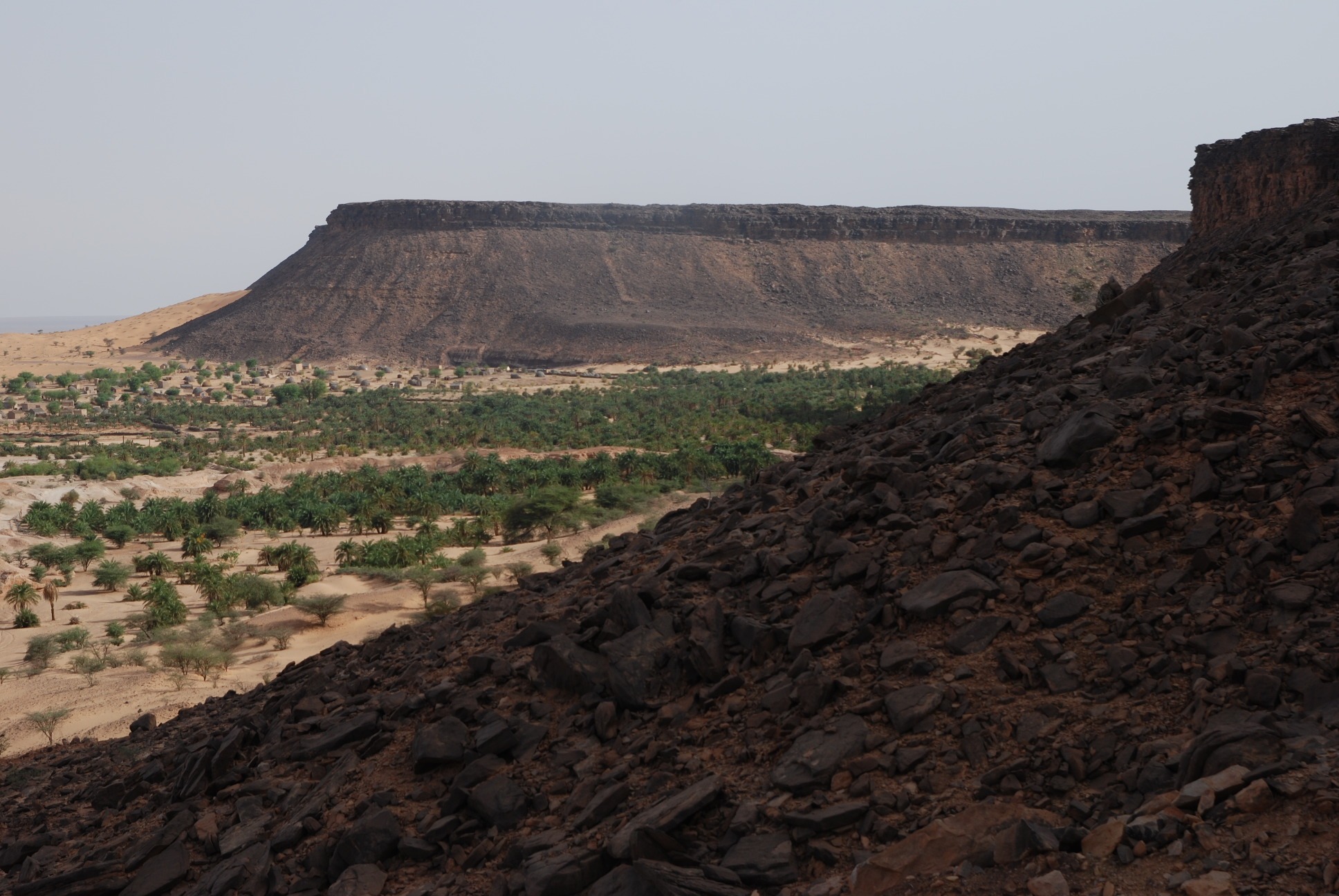
Nouamghar PNBA
Nouamghar is the main access village to Banc d'Arguin National Park, a UNESCO World Heritage site. Nestled between the Atlantic and the Sahara Desert, the Imraguen fishermen still practice cooperative fishing with dolphins, beneath the flights of millions of migratory birds.
Nouamghar is an Imraguen fishing village located at the southern entrance to the Banc d'Arguin National Park (PNBA), designated a UNESCO World Heritage site. Perched between the Atlantic Ocean and the Sahara Desert, this remote corner of the world contains one of Africa's largest coastal wetland zones. The shallow waters shelter millions of migratory birds and dolphins that, according to an ancestral tradition, herd mullet toward the nets of Imraguen fishermen.
Practical Information at a Glance
- Access: track from Nouakchott (approximately 180 km north); 4×4 vehicle essential.
- Park entry: PNBA entrance fee required, payable at the control post.
- Recommended duration: 1 to 3 nights to observe birds and witness a fishing expedition.
- Dress code: covering garments recommended out of respect for residents and against ocean winds.
- Accommodation: basic campsites and guesthouses managed by the Imraguen community.
What to See
The landscape alternates between mudflats, seagrass meadows, and dune ridges. The turquoise waters of the Banc d'Arguin welcome pink flamingos, white pelicans, spoonbills, and waders by the hundreds of thousands. On the beach, lanches — traditional sail boats with a heritage dating back to the Portuguese — are still used daily by Imraguen fishermen.
History and Context
The PNBA was established in 1976 and inscribed as a UNESCO World Heritage site in 1989. The Imraguen, a people of nomadic fishermen, have inhabited this coastline for centuries. Their technique of cooperative fishing with dolphins — fishermen strike the water to call the cetaceans — is one of the rare such practices still alive in the world today. Nouamghar is the primary village providing access to the heart of the park.
Highlights of Your Visit
Cooperative Fishing with Dolphins
Between October and January, bottlenose dolphins drive schools of mullet toward the shore. Alerted by the cetaceans, Imraguen fishermen cast their nets from lanches. Witnessing this spectacle remains a rare experience, documented by researchers from around the world.
Birdwatching
The PNBA is one of the most important stopover sites along the East Atlantic migratory flyway. White pelicans, pink flamingos, terns, and waders congregate on the mudflats at low tide. The winter months (November to February) offer the largest concentrations.
Sailing in a Lanche
Excursions aboard traditional Imraguen sailing vessels allow you to approach the park's islands, inaccessible by other means. These flat-bottomed boats navigate waters less than one meter deep.
Photography Tips
Low-angle light at sunrise and sunset is ideal for photographing birds on the mudflats. Excursions by lanche offer perspectives on nets and dolphins difficult to capture from the beach. Always ask fishermen's permission before photographing them closely.
Location and Access
Nouamghar sits on Mauritania's Atlantic coast, approximately 180 km north of Nouakchott via sandy track. A 4×4 is essential; the track runs along the shoreline and crosses soft sand zones. No public transport serves the village. Most visitors arrive with a local agency or private guide from Nouakchott.
Nearby
- Banc d'Arguin National Park — the entire park spans 12,000 km² between Nouamghar and Iwik, with islands and mudflats to explore by boat.
- Iwik — another Imraguen village in the heart of the park, departure point for the most remote islands.
- Nouakchott — Mauritania's capital, logistical base for organizing your journey to the PNBA.
Frequently asked questions
The dry season, from November to March, is most favorable: manageable temperatures, migratory birds present in large numbers, and calm seas for lanche excursions.
A local guide or agency is strongly recommended. The track is difficult to follow without experience, and connections with the Imraguen community are more easily facilitated through an intermediary known to residents.
Yes, primarily between October and January. Outings take place early in the morning with Imraguen fishermen. Your local guide can arrange access to these expeditions.
The village has basic campsites and guesthouses managed by the community. Comfort is rudimentary; bring your own bedding if you are sensitive to basic conditions.
Residents are Muslim and conservative. Wear clothing that covers shoulders and knees, for both men and women. Ocean winds also make layering advisable in the evening.
Yes. A classic itinerary connects Nouakchott, the PNBA (Nouamghar and Iwik), then continues north to Atar and the Adrar gorges. Plan at least one week for this type of circuit.
Want to discover this destination?
Our local advisors design your tailor-made trip.