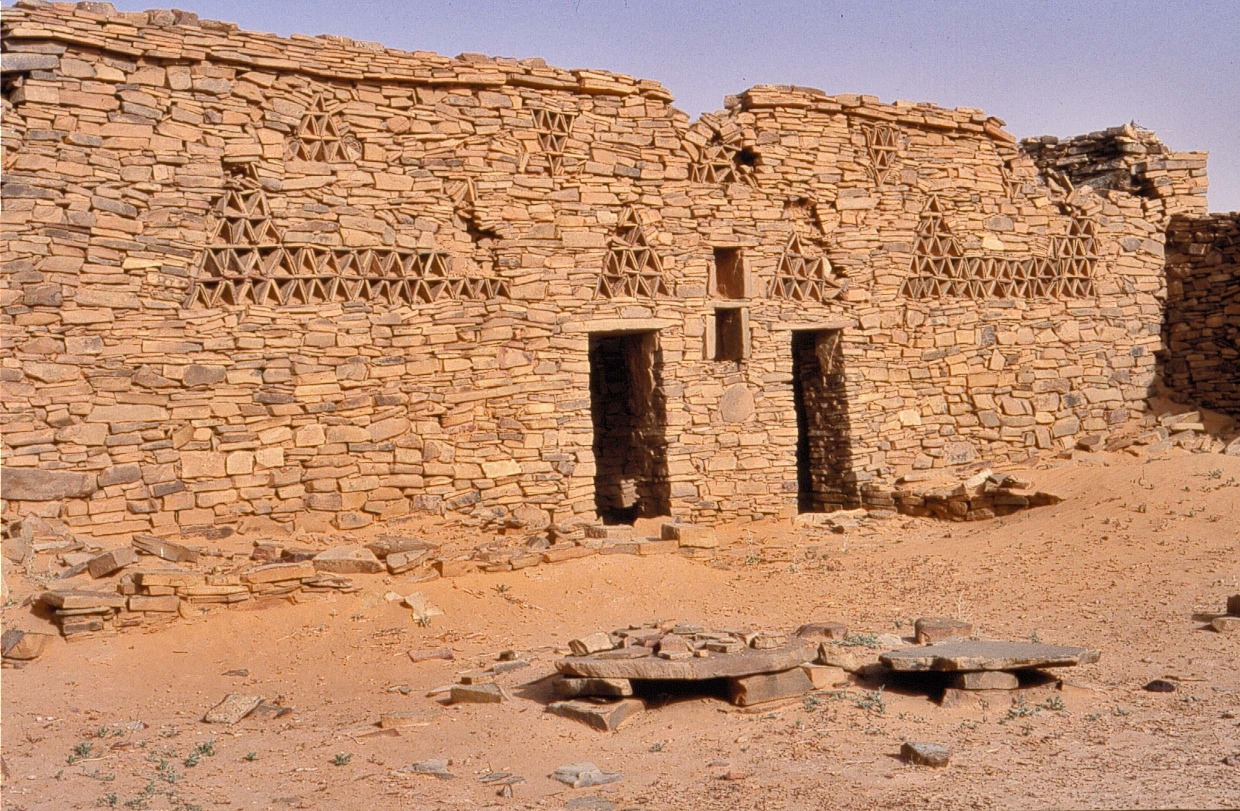
Oualata
An ancient caravan city in southeastern Mauritania, Oualata is listed as a UNESCO World Heritage site. Its ochre façades adorned with white geometric patterns and medieval Arabic manuscripts make it a unique destination at the edge of the Sahara.
Oualata is an ancient caravan city in southeastern Mauritania, inscribed on the UNESCO World Heritage list since 1996 alongside other historic towns in the country. Perched at the gateway to the Sahara, it preserves a unique earthen architecture: houses whose façades are adorned with geometric patterns painted in white lime on an ochre background. A medieval intellectual crossroads, it remains one of the best-preserved cities in the Saharan West Africa.
Practical information at a glance
- Access: Oualata is located approximately 1,100 km east of Nouakchott; the track from Néma (the last major city) is passable only by 4×4.
- Dress code: covered clothing is recommended, particularly for women, out of respect for local customs.
- Recommended duration: at least a full day to explore the medina and the museum.
- Ideal period: October to March, outside the extreme heat of the Saharan summer.
What to see
Oualata's medina first strikes visitors with its narrow lanes bordered by red earthen walls. The façades of houses are decorated with white friezes and interlacing patterns, traditional handiwork by the city's women. The city museum houses ancient Arabic manuscripts, testament to the city's intellectual prominence in the 14th and 15th centuries. The central mosque, austere and imposing, anchors the historic quarter.
History and context
Oualata was a major stop on the trans-Saharan routes linking sub-Saharan Africa to the Maghreb. After the fall of the Mali Empire in the 14th century, it became a refuge for scholars and merchants. Thousands of Islamic manuscripts were copied and preserved here. Its commercial decline in the 16th century, linked to the displacement of trade routes, paradoxically preserved it from modern transformations.
Highlights of the visit
The painted façades
Oualata's wall decorations are unique in Mauritania. Created and maintained by women, they blend geometric, floral, and calligraphic motifs. Each house displays its own visual vocabulary, renewed during festivals or weddings.
The Oualata Museum
This small municipal museum holds medieval Arabic manuscripts, objects from daily caravan life, and pieces of local craftsmanship. It provides essential background to the city's history before wandering through the medina.
The medina and its lanes
Getting lost in the rammed-earth lanes remains the central experience. Houses with interior courtyards, carved wooden doors, and the near-total absence of vehicles give the city a timeless atmosphere.
Etiquette and visit guidelines
- Always ask permission before photographing residents, particularly women.
- Dress modestly; avoid shorts and light clothing in the medina.
- Access to the mosque is generally reserved for Muslims.
- Respect private spaces: some lanes lead to family courtyards.
Photography tips
Early morning light (shortly after sunrise) reveals the textures of ochre façades and the shadows cast by white patterns. The golden hour in late afternoon is ideal for the lanes. Avoid midday: the light is harsh and colors wash out. Favor a low angle to bring out the relief of the painted decorations.
Location and access
Oualata is located in the Hodh El Chargui region, in the far southeastern corner of Mauritania, close to the Mali border. The nearest city with adequate road infrastructure is Néma, accessible from Nouakchott by paved road. The track between Néma and Oualata requires a 4×4 vehicle and an experienced local guide. No regular public transport serves Oualata; going through a local agency is strongly advised.
Nearby attractions
- Néma — the last stopover before Oualata, a supply point and departure point for the trails.
- Tichitt — another UNESCO-listed ancient city, also built of earthen brick, accessible from central Mauritania.
- Chinguetti — Mauritania's holy city, famous for its libraries of manuscripts and surrounding dunes.
- Koumbi Saleh — archaeological site of the former capital of the Ghana Empire, in the same region.
Frequently asked questions
October to March offers manageable temperatures. The Saharan summer (June-September) is extremely hot and not recommended.
You must first reach Néma by paved road, then take a 4×4 track to Oualata. The total journey from Nouakchott takes several days depending on conditions.
A local guide is highly recommended, both for the access track and for exploring the medina and accessing the museum.
The façades are photographable from the street. For interiors or residents, always ask permission first.
Yes, a circuit of UNESCO-listed ancient cities (Chinguetti, Tichitt, Ouadane, Oualata) is possible, but requires at least two weeks and solid 4×4 logistics.
Want to discover this destination?
Our local advisors design your tailor-made trip.