Complete guide to Mauritania
Mauritania spans one million square kilometers between the Sahara and the Atlantic, and remains one of the least visited destinations in West Africa. From our agency in Nouakchott, we organize trips covering four distinct regions: the Adrar and its sandstone plateaus around Atar, the Tagant further south with Tidjikja and its palm groves, the Atlantic coastline of Banc d'Arguin where flamingos and pelicans nest, and finally Nouakchott, the sand capital facing the ocean.
Two key features shape every itinerary here. First, geography: the tracks cross ergs, regs and rocky passages that require 4x4 vehicles and a slow pace, between 200 and 300 kilometers per day maximum. Second, Moorish and Soninké culture, alive in the ksour of Chinguetti and Ouadane, UNESCO World Heritage sites, where thirteenth-century manuscript libraries are still consulted. The iron ore train, 700 kilometers between Zouérat and Nouadhibou, remains one of the most raw railway experiences in the world.
For a first trip, allow twelve to fifteen days to combine the Adrar and the coast. Returning travelers appreciate the Tagant and Aftout for their isolation. The optimal season runs from October to March, with temperatures exceeding 45°C inland during summer.
The regions of Mauritania
Each region has its own personality: climate, landscapes, pace of life and ways of traveling. Our local team helps you choose the combination that suits you.
Adrar
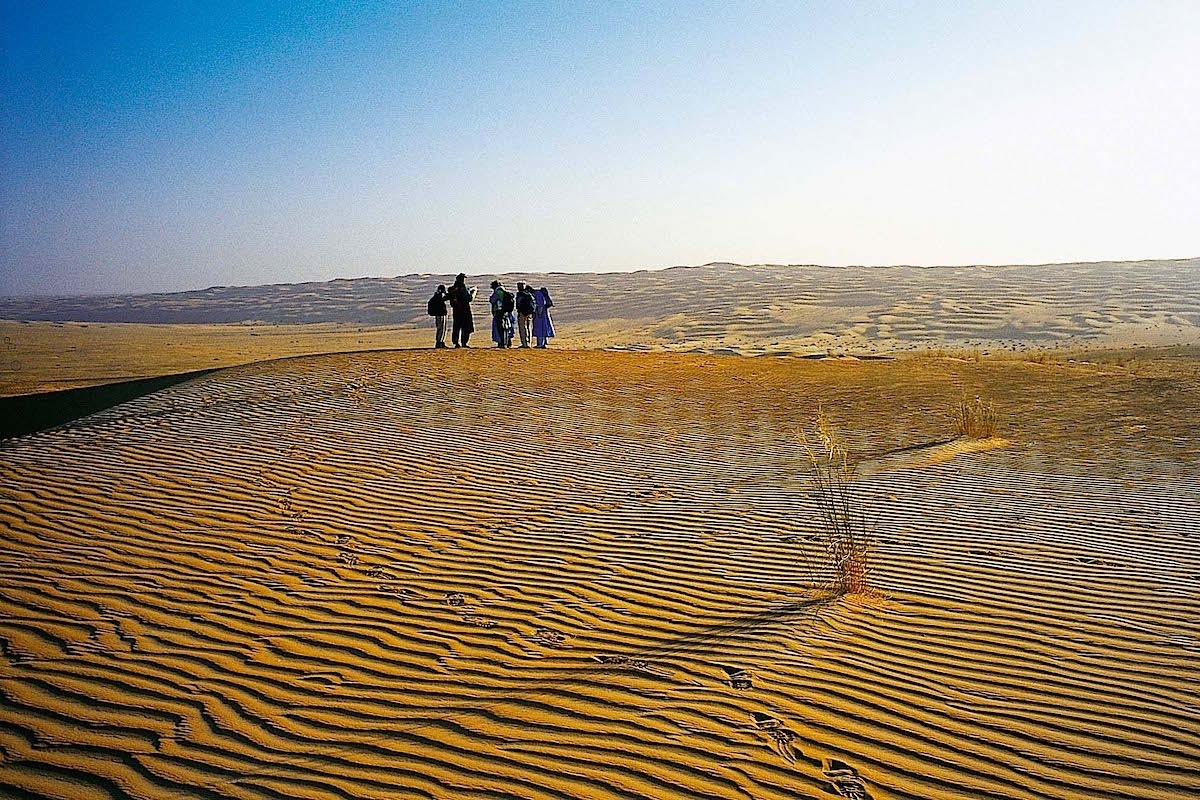
The Adrar region concentrates the essentials of Mauritania's desert offerings. Around Atar, the regional capital 450 kilometers from Nouakchott, tracks lead to Chinguetti and Ouadane, two Saharan ksour whose libraries have preserved manuscripts for eight centuries. The plateau peaks at 700 meters, which slightly moderates winter nights (10 to 15°C). We organize treks lasting two to six days in the Amatlich erg or around the Terjit guelta, a palm grove fed by a permanent spring. Bivouacking under Moorish tents, with mint tea and mechoui, remains the most authentic way to understand the region.
Banc d'Arguin
Between Nouakchott and Nouadhibou, the Banc d'Arguin national park stretches over 200 kilometers of coastline and is home to one of the world's highest concentrations of migratory birds. Two to three million waders overwinter there. The Imraguen, traditional fishermen, still practice mullet fishing with the help of dolphins at Iwik and Mamghar. We set out in a lanch, a local wooden sailboat, to reach the nesting islets. The temperate ocean climate moderates temperatures, around 22°C in winter. Plan for a minimum of two nights to enjoy the site without precipitation.
Tagant
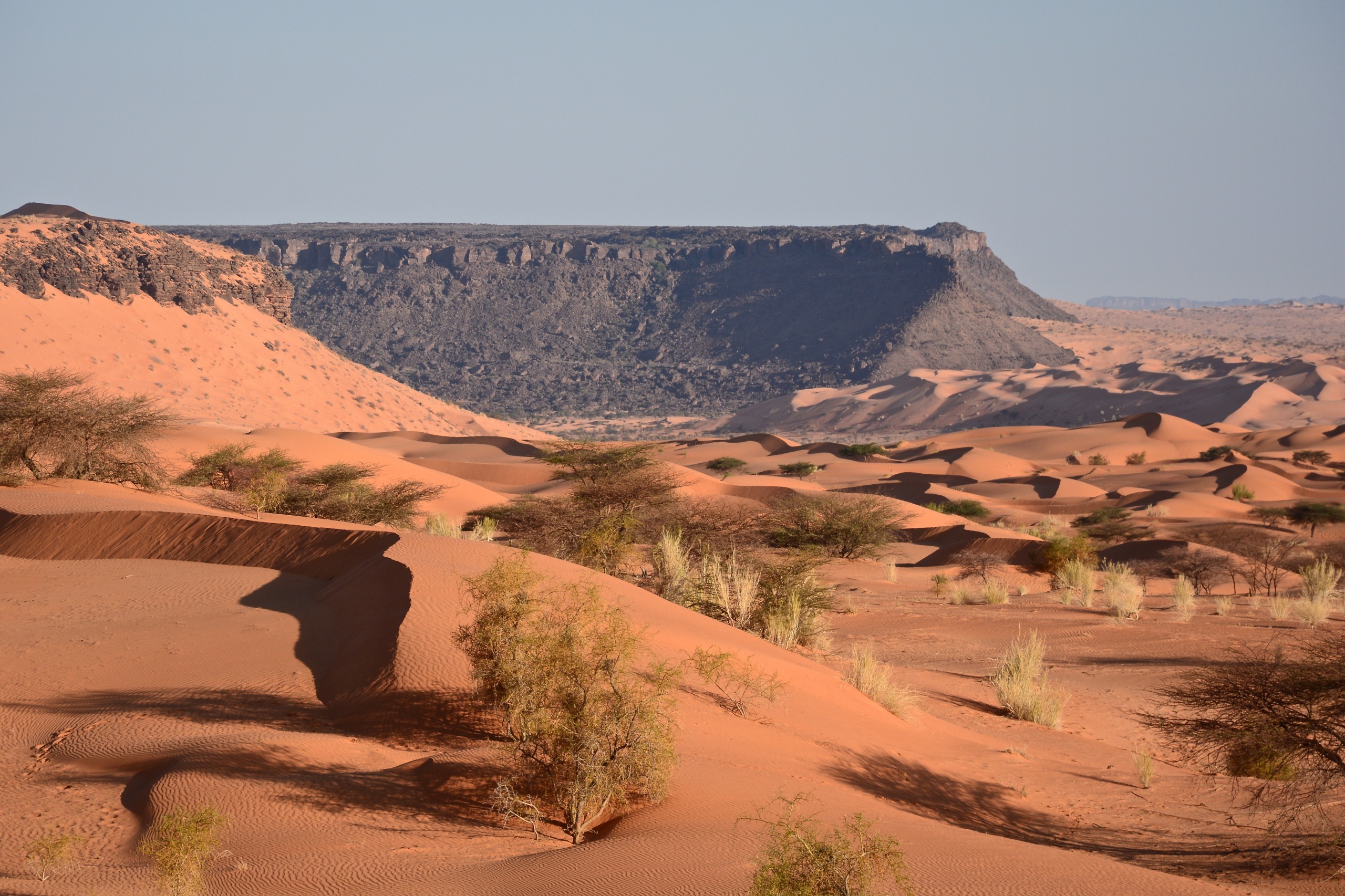
The Tagant, a sparsely visited central plateau, offers a wilder alternative to the Adrar. Around Tidjikja, a city founded in the 13th century, terraced palm groves cultivate dates and henna. Further east, Tichitt, a UNESCO World Heritage site, preserves its polychrome stone houses in an almost desert setting. We combine this area with the Adrar on three-week trips, crossing the Dhar Tichitt escarpment. The tracks are long, sometimes 12 hours by 4x4, and total isolation is guaranteed. A region reserved for travelers already accustomed to Saharan conditions.
Nouakchott and Southern Coast
Nouakchott, the capital founded in 1958, is home to over a million inhabitants today and serves as the country's gateway. The fishing port, where 2,000 colorful pirogues dock each evening, remains the sight that most impresses travelers. Heading south, the road leads to Diawling and the Senegal River, a natural border where vegetation becomes Sahelian. We organize circuit briefings from Nouakchott and recommend spending a night here to visit the camel market at El Mina and the national museum.
Desert Train
The iron ore train connecting Zouérat to Nouadhibou travels 704 kilometres across the desert in 18 to 20 hours. At 2.5 kilometres long, it transports iron ore extracted from the north. Travellers board free of charge in empty ore wagons on the return journey, or in a passenger car for around thirty euros. We organize this crossing for experienced travellers, with guide support, anti-dust glasses and a tagelmust. Night temperatures drop to 5°C in winter. A raw experience, to be included in a minimum fifteen-day itinerary encompassing Adrar and Banc d'Arguin.
Explore by theme
Unique experiences tailored to every traveler.
Culture & Heritage
Temples, musées, sites historiques
Nature & Landscapes
Parcs nationaux, montagnes, forêts
Sea & Beaches
Littoral, îles, sports nautiques
Wildlife & Biodiversity
Observation animale, sanctuaires, réserves
Activities & Adventure
Trek, kayak, escalade, sports outdoor
Gastronomy
Cuisine locale, marchés, cours de cuisine
We use cookies to improve your experience and measure our site's audience. You can choose what you accept. Learn more.